

Tardive Dyskinesia (TD)
What is TD?
Tardive dyskinesia (TD) is an involuntary movement disorder that can cause uncontrollable movements of the face, torso, limbs, fingers, and toes. It is associated with certain antipsychotic medications used to treat mental health conditions such as bipolar disorder, major depressive disorder, schizophrenia, and schizoaffective disorder. Some prescription medicines used to treat gastrointestinal disorders may also cause TD. Because TD can be overlooked or misunderstood, education and routine screening are important. Earlier recognition and treatment can make a positive impact on people who are already managing their mental health.
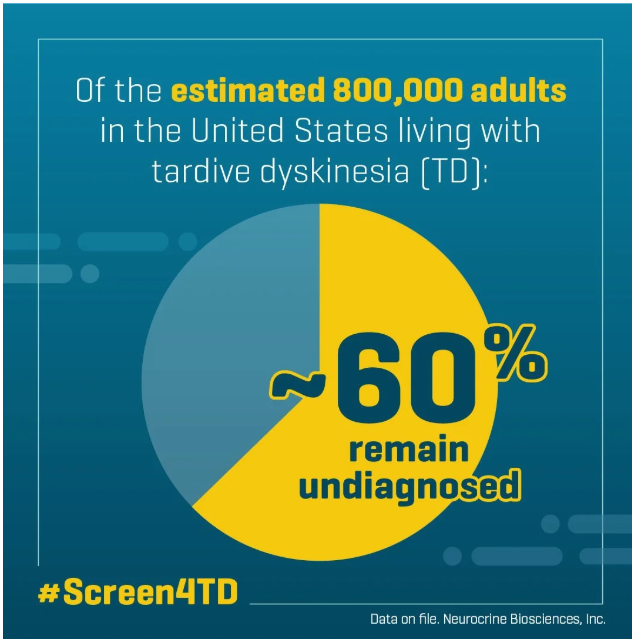
TD is estimated to affect at least 800,000 adults in the United States, and approximately 60% of those living with TD remain undiagnosed. Because TD can affect physical, social, and emotional well-being, it is often more than a movement disorder alone. Many people living with TD report feeling judged, avoiding public settings, or needing help with daily activities. Raising awareness can help reduce stigma and encourage earlier recognition, routine screening, and treatment.
Common Signs To Watch For
Uncontrollable movements can look different from person to person. Examples may include:
Lip pursing or puckering
Darting tongue
Excessive blinking
Twisting hands
Twitching
Jerking
Shaking
If someone taking antipsychotic medication notices abnormal, involuntary, or repetitive movements, it is important to talk with a healthcare provider.
Resources
Explore educational materials that can help individuals, families, and care partners better understand TD and prepare for conversations with a healthcare provider.
TD Facts Sheet
An overview of TD, including risk factors, impact, and the importance of routine screening.
Healthcare Provider Discussion Guide
A guide to help start a conversation with a healthcare provider about possible TD movements during an appointment in person, over the phone, or online.
Additional TD Information
Access more educational materials, videos, and lived-experience resources about TD.
About TD Awareness Week
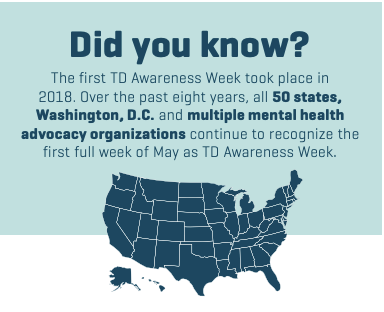
TD Awareness Week helps bring attention to tardive dyskinesia, reduce stigma, and support those affected by the condition. The first TD Awareness Week took place in 2018, and over the past eight years all 50 states, Washington, D.C., and multiple mental health advocacy organizations have continued to recognize the first full week of May as TD Awareness Week.
This work is part of a broader effort to encourage education, routine screening, and earlier diagnosis and treatment.